
A Pavilion at the “Damascus Exhibition” Documents the Atrocities of Assad’s Prisons
Al-Taj News – In a scene blending the memory of pain and freedom, the “Damascus International Exhibition,” which opened on Wednesday, hosted an exceptional pavilion organized by the “General Administration of Prisons and Rehabilitation” at the Ministry of Interior under the title “When the Walls Speak.”
The pavilion offers a live immersive experience between two distinct stages in the country’s history. The first depicts the brutality of prisons and detention centers under the ousted regime, while the second showcases the transition toward reforming them in the new Syria, according to media reports.
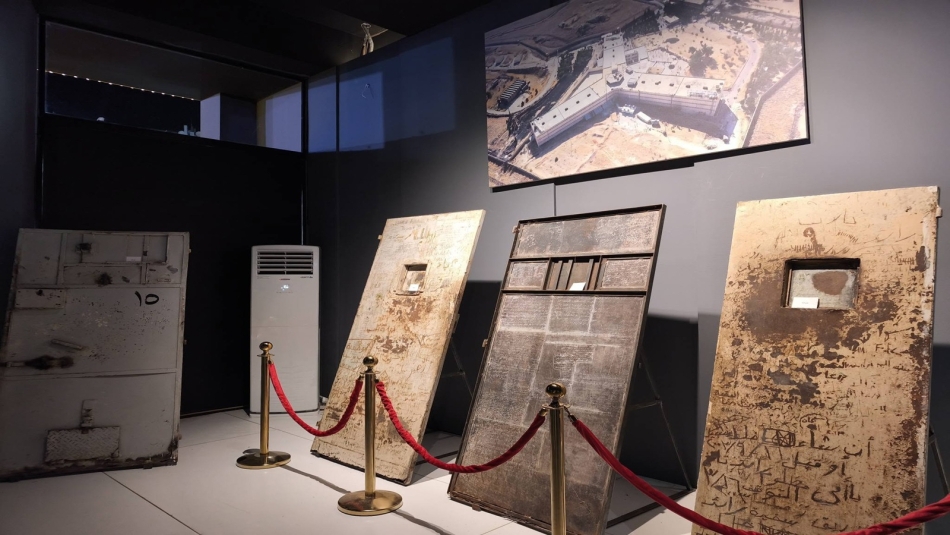
The first section of the pavilion included authentic belongings and details brought from notorious detention centers such as “Saydnaya Prison,” recounting the stories of detainees and the first moments of liberation. Videos and photographs showing the contents of the pavilion circulated, including original prison doors and remnants of clothing worn by detainees, including remnants of clothing belonging to women and children, in addition to writings and expressions of hope and supplication written by prisoners on the walls, such as: “O Allah, reward me for my affliction and replace it for me with something better.”
The section also includes an accurate recreation of one of the cells and solitary confinement rooms in all their details, portraying the harsh reality experienced by prisoners, as well as the primitive means of bartering and resilience they used inside the prison corridors until the moments of liberation and the collapse of the ousted regime.
Signs were displayed throughout the pavilion calling for the victims not to be forgotten and carrying the slogan: “I saw the truth, so let you be its legacy.”
The second section of the pavilion presents an image highlighting rehabilitation and reform efforts inside prisons following the fall of the Assad regime, through the display of paintings and artistic models created by detainees during their detention.
Video recordings and documentary photographs also showed detainees engaging in various sports, recreational, and cultural activities, signaling the transformation of these institutions from places of repression and abuse into environments dedicated to rehabilitation and social integration, and emphasizing the fundamental difference between the nature of the detention centers established by the ousted regime and the concept of correctional prisons in Syria today.
The pavilion sparked a wave of interaction and reactions on social media, with some viewing it as an infringement on the supposed human rights documentation of the issue of prisons and detention centers, while others found it moving because it carries “memories of the pain and bitterness experienced by detainees and their families.”
Some commenters considered visiting the pavilion “a duty for every free person who saw that victory was not easy and that there were unknown soldiers who sacrificed years of their lives and their souls.”